Inquiry
Form loading...

10 CNC Nylon Tips for Global Buyers

CNC Nylon can deliver lightweight, wear-resistant parts, but successful buying starts with more than a resin name. Global buyers must compare grade, moisture conditioning, dimensional tolerances, and machining requirements. A nylon bar that looks uniform may still move after machining, especially when a thin wall or close-fitting bore is involved. Small details matter.

The scale of plastics manufacturing makes material selection consequential. PlasticsEurope’s Plastics—The Fast Facts 2023 reports 400.3 million tonnes of plastics production worldwide in 2022. That figure covers plastics broadly, not nylon alone, but it shows the size of the supply landscape buyers navigate. Grand View Research’s Nylon Market report also tracks a substantial global market, while noting demand across automotive, electrical, and industrial applications. Check each report’s scope and year before using market estimates for purchasing forecasts.

Materials engineer Robert A. Malloy, author of Plastic Part Design for Injection Molding, is a useful reference for understanding how polymer choice and part design interact. A practical buying maxim for this guide is: “Specify the finished part, not just the nylon grade.” It is a reminder, not a verbatim quotation from Malloy. That distinction matters. Nylon’s behavior can vary with grade, moisture, geometry, and cutting conditions; no single specification guarantees the same result everywhere. The ten tips ahead focus on questions buyers can verify with suppliers, from material documentation to sample inspection. Expect trade-offs. A cheaper quote can become costly if the part shifts after machining.
10 CNC Nylon Tips for Global Buyers

Understanding CNC-Machined Nylon and Its Key Material Grades

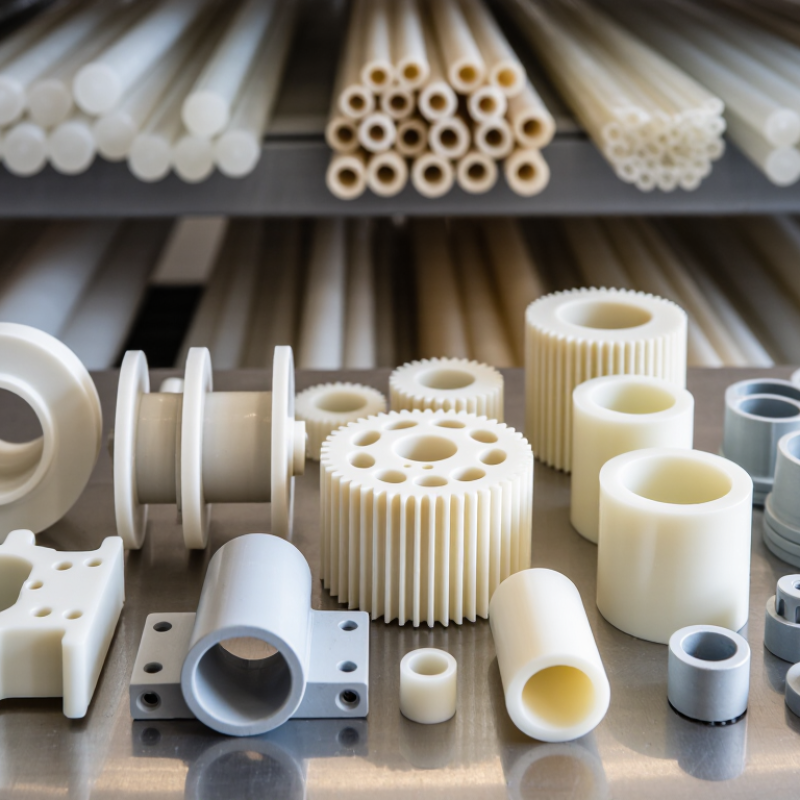
CNC-machined nylon is cut from solid stock, so the selected grade affects both machining behavior and part performance. Nylon is valued for its low weight, wear resistance, and ability to absorb impact. It is not dimensionally stable in every environment. Moisture can change its size, and heat can soften it. A close-fitting part should be checked under conditions similar to its real use.

PA6 is a common choice for general-purpose components. It offers good toughness and is often available in larger stock sizes, though moisture uptake can affect dimensions. PA66 is generally stiffer and can suit parts exposed to higher temperatures, but it may be less forgiving under impact. PA12 absorbs less moisture than many other nylon grades, making it useful when dimensional consistency matters. The trade-off is cost and availability. Cast PA6 can be supplied in thick sections, but its properties and machining response depend on the specific material and process.

A common planning mistake is choosing a grade from a data sheet alone. Test the actual part if fit is critical. Small features, thin walls, and sharp internal corners can distort or concentrate stress during machining and use. Allow for moisture conditioning where relevant, and confirm tolerances with the machinist before production. Even then, the first sample may need adjustment. That is normal.


Choosing the Right Nylon for Performance and Operating Conditions

Selecting CNC-machined nylon starts with the operating environment, not the part drawing alone. A bracket beside a warm motor faces different demands from a wet conveyor guide. Nylon absorbs moisture, which can change dimensions and stiffness. Allow for this when fits are tight. Dry measurements may not predict service dimensions. That matters.

Compare grades against load, speed, temperature, and exposure to water or chemicals. PA6 and PA66 are common choices, but their properties vary by grade and conditioning. Cast nylon can suit larger components, while modified grades may offer better wear or impact performance. Check continuous and peak temperatures separately; friction can heat a bearing surface beyond the surrounding air temperature. Small detail. Not trivial. For loaded parts, consider creep: nylon can deform gradually under steady pressure, even when the initial stress seems acceptable. A catalog value alone can be misleading. Ask for test conditions, then machine a sample and check its fit after exposure to realistic humidity and heat. That extra check may feel cautious, but choosing by a single strength figure is an easy mistake.

Designing Parts for Precision, Strength, and Efficient Machining

Nylon can deliver strong, lightweight parts, but it does not behave like aluminum during machining. It absorbs moisture and expands with heat, so dimensions may shift after cutting. That matters. Specify the operating environment and fit before choosing tolerances. A close fit measured straight off the machine may loosen after a humid shipment or change during service.

Design for the material’s flexibility. Avoid long, thin walls that can chatter or bend under tool pressure. Add generous corner radii and enough wall thickness around holes and fasteners. For a sliding assembly, provide practical clearance rather than demanding a metal-like fit. Nylon grades differ, too; confirm the selected grade’s properties instead of relying on a generic material label. This step is easy to overlook.

Machining quality depends on sharp tools, steady workholding, and effective chip removal. Excess heat can soften edges and affect final dimensions. Clamping force should hold the blank securely without deforming it. Where dimensions are critical, discuss inspection temperature and moisture conditioning with the supplier. Measure representative features after the part has stabilized, not only while it is warm at the machine. A little extra allowance may improve reliability, though it can also add cost; test the fit on an early sample before approving a production batch.

Assessing Supplier Capabilities, Quality, and Certifications

Global buyers should judge a CNC nylon supplier by what its process can demonstrate, not by polished sales language. Ask which machines handle your part, how tool wear is monitored, and whether the shop can hold the tolerances on your drawing. Ask for evidence. Recent inspection records can show dimensions, sample size, and measurement methods.

Nylon can absorb moisture, so dimensions may shift between machining and inspection. A capable supplier should explain how material is stored and conditioned, and when parts are measured. For a small housing, request checks on bore diameter, wall thickness, and flatness. These details matter. A certificate folder alone cannot prove consistent parts.

Check that any quality certificate is current, issued to the actual manufacturing site, and relevant to the work being quoted. If ISO 9001 is claimed, verify its scope and expiry date with the issuing body. Also ask for material traceability, nonconformance handling, and a sample inspection report. One awkward gap is worth discussing: some suppliers measure a first article carefully but provide little evidence of repeat checks. I would clarify that before approving production, especially when parts must fit an existing assembly.

Typical Tensile Strength Ranges for CNC Nylon Stock

These indicative ranges vary with grade, conditioning, and test method; they are not guaranteed values for every stock product. Ask suppliers for grade-specific technical data sheets and lot traceability. ISO 9001 certifies a quality management system, not the properties of a particular nylon product.

Planning Costs, Logistics, and International Procurement

For global buyers, the quoted price of a CNC-machined nylon part is only one piece of the cost. Material grade, stock size, machining time, tolerances, and finishing all affect the final figure. Tight tolerances may require extra inspection, while complex pockets can increase setup time. Ask suppliers to separate tooling, sampling, production, and packaging charges. Small details matter.

Nylon can absorb moisture, which may affect dimensions during storage or after delivery. Specify the grade, drawing revision, critical measurements, and intended operating conditions before requesting quotes. A first-article inspection can reveal fit issues before a large order ships. Still, a sample made in one climate may not behave exactly the same after a long sea journey. Build in time to check it.

Freight costs depend on shipment size, route, delivery terms, and urgency. Compare air and ocean options using the same delivery scope, and confirm who handles export documents, duties, and local delivery. Ask for protective packaging that prevents parts from rubbing or deforming in transit. Verify import requirements and tariff classification with a qualified customs professional. Leave room in the schedule for inspections, port delays, and corrections. The estimate may look precise, but international delivery rarely follows a perfect calendar.

10 CNC Nylon Tips for Global Buyers - Planning Costs, Logistics, and International Procurement
No. Planning Area Buyer Tip Cost or Logistics Consideration Procurement Check
1 Material specification State the nylon grade and any required condition, such as unfilled or reinforced material. Do not treat all nylon grades as interchangeable. Grade, reinforcement, and stock availability can affect material price, machinability, and lead time. Request the material designation and a certificate or other traceability documents when required for the application.
2 Moisture and dimensions Account for nylon’s moisture absorption when defining critical dimensions and inspection conditions. Moisture uptake can change dimensions and mechanical behavior; storage and measurement conditions may matter. Identify critical dimensions and agree on how parts will be conditioned and inspected.
3 Tolerances Apply tight tolerances only to features that need them, and specify tolerances directly on the drawing. Tighter tolerances can increase machining, inspection, and scrap costs, particularly on moisture-sensitive parts. Ask the supplier to review tolerance feasibility before approving the quote.
4 Part design Review wall thicknesses, deep cavities, small features, and tool access with the machining supplier. Features that require extra setups, specialized tools, or extensive material removal may add time and cost. Confirm the proposed design can be machined from available bar, rod, or sheet stock.
5 Quantity and batch size Request pricing at realistic order quantities and consider whether repeat orders are likely. Setup and programming costs are spread differently across small and large batches; stock minimums may also apply. Compare unit price, setup charges, minimum order quantity, and any price breaks on the same specification.
6 Lead-time planning Ask for separate estimates for material sourcing, machining, inspection, and dispatch. Lead time can vary with stock availability, production capacity, order size, and the agreed inspection scope. Confirm the delivery date, whether it is a dispatch or arrival date, and how schedule changes will be handled.
7 Packaging and protection Specify protection against impact, contamination, and movement during transit; identify any individual-part packaging needs. Packaging affects shipment size and may add material and handling costs. Nylon parts should be stored in conditions suitable for the application. Approve packaging requirements and request photographs or packing details for fragile or precision parts.
8 Freight comparison Compare transport options using the packed shipment dimensions, weight, destination, and required delivery window. Freight charges may depend on chargeable weight, route, service level, fuel surcharges, and accessorial fees. Request a shipment estimate that states the service, estimated transit time, and included or excluded charges.
9 Customs and import costs Confirm the product description, country-of-origin information, and proposed customs classification with the relevant customs professional or authority. Import duty, taxes, and clearance requirements depend on the destination country, classification, origin, and shipment terms. Clarify who will prepare export documents, arrange customs clearance, and pay applicable import charges.
10 Payment and delivery terms State the agreed Incoterms® rule, named place or port, and version in the purchase contract. Delivery terms allocate specific transport-related responsibilities, costs, and risks; they do not by themselves replace payment terms or the sales contract. Ensure the quotation, purchase order, and shipping documents use consistent terms and clearly identify the named place.
Planning note: Prices, lead times, freight charges, duties, and import requirements vary by part design, order details, route, and destination. Obtain a current supplier quotation and verify destination-country requirements before placing an order.