- sales@bjbod.com
- Mon - Sat at 7:00AM to 9:00PM
Inquiry
Form loading...
Buying a Cnc Coupling for international machinery is rarely a simple catalog decision. A coupling may look small, yet it controls torque transmission, alignment tolerance, vibration, and machine uptime. Global buyers need more than a low unit price. They need evidence that the part will perform after installation, shipping, and repeated production cycles.
This guide shares seven practical buying tips drawn from common sourcing and maintenance experience. Check bore size, rated torque, maximum speed, angular misalignment, and backlash against the actual machine data. Confirm the material and surface treatment, especially when coolant, dust, or temperature changes are present. Ask suppliers for dimensional drawings, inspection records, test results, and traceable batch information. A clear sample process can reveal poor machining before a full order creates expensive delays. Small details matter.
Supplier evaluation also deserves careful attention. Review machining capacity, quality controls, communication speed, packaging methods, and realistic lead times. Request references or verified project evidence when possible. Do not assume every published specification means the same performance. Some values depend on lubrication, mounting accuracy, or test conditions. That is easy to miss. Compare quotations using total landed cost, not only the factory price, while checking export documents and agreed delivery terms. A thoughtful decision may still need revision after field feedback. That is not failure; it is responsible engineering. These tips help buyers ask better questions, reduce avoidable risk, and select a Cnc Coupling with dependable long-term value.
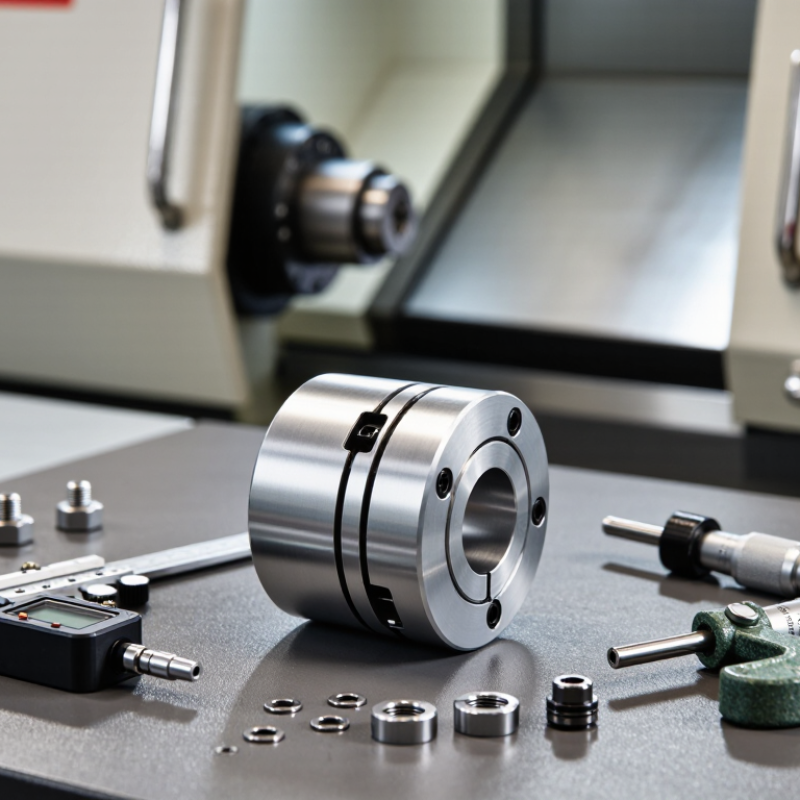
Selecting a CNC coupling starts with torque, not bore size. Use T = 9550P/n, where T is torque in newton-metres, P is power in kilowatts, and n is speed in revolutions per minute. A 15 kW spindle running at 1,500 rpm produces about 95.5 Nm. At 6,000 rpm, the same motor produces only 23.9 Nm. This simple change is often missed during purchasing.
Rated RPM means the continuous operating speed, not the highest speed shown in a catalogue. Check acceleration torque, reversing loads, emergency stops, and thermal conditions separately. IEC 60034-1 provides a useful framework for motor ratings, while ISO 21940 highlights the importance of balance quality in rotating equipment. The U.S. Department of Energy reports that motor-driven systems consume about 69% of industrial electricity in the United States. Efficient transmission and correct coupling selection therefore affect more than machine reliability.
Tip: Write the duty cycle beside the formula. Include continuous torque, peak torque, rated RPM, maximum RPM, shaft diameters, and allowable misalignment. For example, a coupling for a 95.5 Nm load should not be selected at exactly 95.5 Nm. A practical service factor may raise the required rating to 140 Nm or more, depending on impact and reversing frequency. This is where judgment matters. A spreadsheet can still look correct while ignoring torsional resonance, insufficient clamping length, or backlash. Confirm the calculation with measured load data when possible. Tens of minutes on a test stand can prevent weeks of spindle downtime.
Practical requirement checklist with engineering calculations for selecting a coupling for CNC and other precision-drive applications
| No. | Buying Tip | Requirement to Define | Engineering Data / Formula | Illustrative Selection Example | Buyer Verification Point |
|---|---|---|---|---|---|
| 1 | Calculate transmitted torque | Motor power, operating speed, starting condition, and service factor |
T = 9550P/n T = torque in N·m; P = power in kW; n = speed in r/min |
5.5 kW at 1,450 r/min: 9550 × 5.5 ÷ 1450 = 36.2 N·m With a 1.5 service factor: 54.3 N·m minimum design torque |
Select a coupling whose continuous and peak torque ratings exceed the calculated design torque. |
| 2 | Match rated and maximum RPM | Normal operating speed, overspeed condition, balance grade, and allowable rotational speed | Operating speed must remain below the coupling's published maximum speed, including any applicable safety margin. |
Spindle speed: 6,000 r/min Required coupling rating: at least 6,000 r/min; a higher rated speed is preferable when permitted by the machine design. |
Confirm maximum RPM for the exact bore, keyway, clamp arrangement, and balance configuration—not only for the basic coupling size. |
| 3 | Check shaft and bore compatibility | Shaft diameters, shaft tolerances, keyway or clamp connection, hub length, and available axial space | Both coupling bores must match the actual shaft diameters. The hub bore, shaft fit, and fastening method must support the transmitted torque without slip. |
Drive shaft: 24 mm Driven shaft: 28 mm Required configuration: 24 mm × 28 mm bore |
Provide a dimensioned shaft drawing and specify tolerances, key dimensions, thread details, and minimum insertion depth. |
| 4 | Define misalignment limits | Parallel offset, angular misalignment, axial movement, and installation accuracy | Flexible couplings accommodate limited misalignment, but the permitted values are coupling-specific and should not be treated as an installation target. | Preliminary requirement: 0.10 mm parallel offset and 0.5° angular misalignment, subject to final coupling specifications. | Use alignment tools during installation and verify that the expected misalignment is within the supplier's continuous operating limits. |
| 5 | Evaluate stiffness and backlash | Positioning accuracy, reversal frequency, servo response, torsional stiffness, and allowable backlash | Precision CNC axes generally require low backlash and sufficient torsional stiffness. A zero-backlash requirement must be confirmed from the technical specification. |
CNC rotary axis: frequent reversing motion Target requirement: backlash ≤ 0.05° and documented torsional stiffness suitable for the servo tuning range. |
Ask for measured backlash, torsional stiffness, and test conditions; do not infer precision from the coupling material alone. |
| 6 | Select material and environmental protection | Coolant exposure, humidity, dust, temperature, corrosion risk, and cleanability | Material and surface protection must suit the environment. Temperature can affect elastomers, lubrication, dimensional stability, and allowable torque. |
Coolant-exposed machine enclosure: Requirement: corrosion-resistant hub finish, sealed or suitable flexible element, and operating range of approximately 0–80°C, subject to final material data. |
Request chemical compatibility, temperature limits, cleaning guidance, and corrosion-protection details for the complete assembly. |
| 7 | Confirm service life, safety, and documentation | Duty cycle, shock load, maintenance access, replacement interval, inspection method, and compliance documents | For cyclic or shock-loaded equipment, use an appropriate service factor and verify peak torque, fatigue capability, guarding, and installation instructions. |
16-hour daily duty with frequent starts and reversals: Preliminary service factor: 1.75 11 kW at 960 r/min: 109.3 N·m nominal; design torque: 191.3 N·m |
Obtain drawings, torque-speed curves, installation tolerances, balancing information, inspection criteria, and replacement-part specifications. |