- sales@bjbod.com
- Mon - Sat at 7:00AM to 9:00PM
Inquiry
Form loading...
Precision machining depends on more than a capable spindle and a carefully programmed toolpath. The tool must also be held securely and consistently. A Cnc Collet provides a close-fitting grip around the tool shank, helping maintain alignment during cutting. In a workshop, that difference can show up in a finished bore, a smoother surface, or fewer marks left by vibration. Small details count.
Choosing the right collet means matching its size and type to the tool, holder, machine, and work being done. A clean, undamaged collet matters too: chips or wear can prevent even contact and introduce runout. That may affect tool life, dimensional accuracy, and repeatability, especially when a job involves tight tolerances or long production runs. These are practical considerations, not guarantees; setup, tool quality, machine condition, and cutting parameters still play their part.
This guide examines why CNC collets are used for precision machining, what to consider when selecting them, and how careful maintenance supports reliable performance. It also looks at their limits. A collet cannot correct every alignment problem, and tighter clamping alone does not ensure better results. The right choice comes from checking the actual setup and measuring performance, rather than relying on assumptions. That is worth remembering.
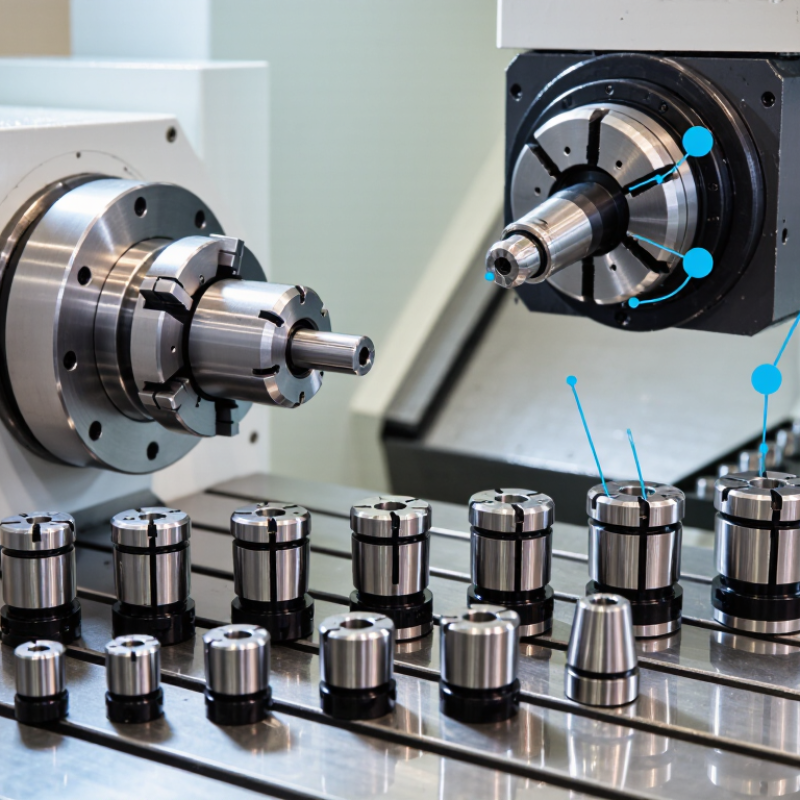
A CNC collet is a slotted steel sleeve that grips a cutting tool’s cylindrical shank. The collet sits inside a matching tapered holder. As the nut tightens, the taper compresses the slots around the shank. Contact is distributed around the tool, rather than concentrated at one point. Small parts matter.
ER collets are widely used because one collet can cover a defined range of shank diameters. ISO 15488:2008 specifies dimensional and tolerance requirements for ER collets, giving shops a shared basis for checking fit. It does not guarantee the runout of an assembled spindle. Chips on the taper, a worn collet, or uneven tightening can still introduce error. I’d check the tool, collet, and holder as one assembly, not assume the collet alone ensures precision.
The 2024 workforce study by Deloitte and the Manufacturing Institute projects 3.8 million manufacturing jobs could be created in the United States by 2033, with 1.9 million potentially unfilled. That is not collet-performance data, but it highlights the value of repeatable setups and clear procedures. A clean taper and correctly sized collet help make tool changes consistent. Still, “tight enough” is a poor measurement. Use the holder maker’s specified tightening method and verify runout at the tool shank.
| Dimension | What It Means | How It Affects Precision | Practical Selection or Setup Check |
|---|---|---|---|
| Collet construction | A CNC collet is a slotted, spring-like sleeve made to contract around a cutting-tool shank when compressed in a matching holder. | Even contact around the shank helps center and retain the tool. Dirt, damage, or uneven wear can interfere with that contact. | Inspect the slots and gripping surfaces for chips, corrosion, cracks, or wear; clean the collet and holder before assembly. |
| Clamping mechanism | In a common collet system, a nut presses the collet into a matching tapered seat, causing it to close around the tool shank. | The collet, nut, holder taper, and tool shank work as one assembly. A faulty or poorly assembled component can affect grip and concentricity. | Use the collet and nut designed for the holder system, and follow the holder maker’s assembly and tightening instructions. |
| Collet system and size | ER is a widely used general-purpose collet system. Other systems have different dimensions, ranges, and intended uses. | A collet must match its holder system and be used within its specified clamping range. The permitted range varies by collet size and system. | Check the collet marking and manufacturer’s size chart. Do not assume collets from different systems are interchangeable. |
| Tool-shank fit | The collet grips the cylindrical shank of the tool; it is not intended to clamp the cutting flutes or an undersized shank outside its specified range. | A correct, clean shank fit supports secure retention and repeatable positioning. Incorrect fit can contribute to tool movement or runout. | Measure the shank when needed, remove oil and chips, and use a collet suited to the actual shank diameter. |
| Runout of the assembly | Runout is the measured variation in a rotating tool’s position. It is influenced by the holder, collet, nut, tool shank, cleanliness, and assembly. | Excessive runout can cause uneven tooth loading, inconsistent surface finish, and accelerated tool wear. | Measure runout with an appropriate indicator near the tool shank or cutting end. Check components and setup if readings are higher than the machining requirement. |
| Tool retention | Collet compression creates frictional contact with the shank to resist cutting forces and rotation. | Insufficient or uneven clamping can allow a tool to slip; correct tightening helps achieve the intended holding force. | Use a suitable collet wrench or torque tool and follow the specified tightening procedure. Avoid overtightening, which can damage components. |
| Balance and operating speed | At high spindle speeds, balance of the rotating holder assembly becomes increasingly important. | Imbalance can increase vibration and affect finish, tool life, and spindle loading. A collet alone does not determine assembly balance. | For high-speed work, use components rated for the intended speed and follow the holder system’s balancing and operating guidance. |
| Typical machining uses | Collet holders are commonly used for end mills, drills, reamers, and other tools with compatible cylindrical shanks. | The appropriate holder depends on tool size, cutting forces, required accuracy, spindle interface, and machining conditions. | Choose a holder and collet system that match the tool and operation; consider a different holding method when the application requires specialized retention or stiffness. |